

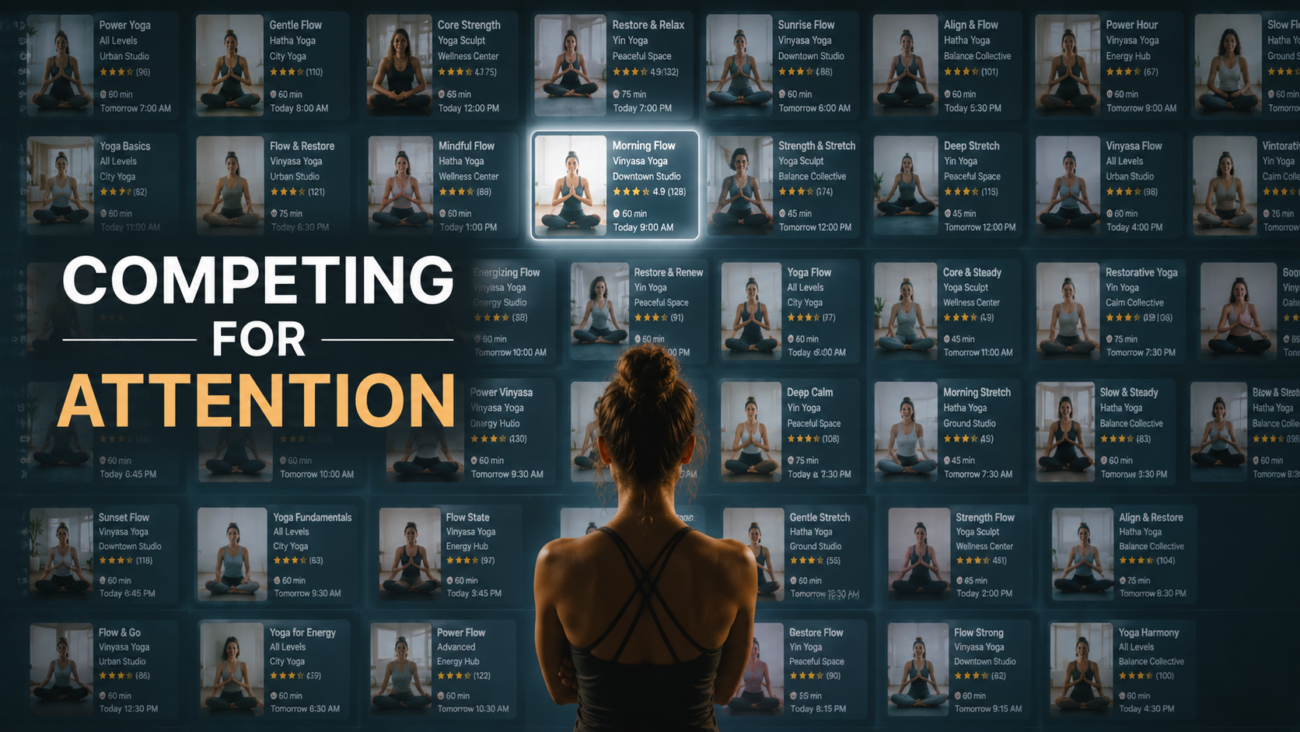
Cannibalization in Disguise: How Marketplace Algorithms Force Yoga Teachers to Compete Against Themselves
You worked hard to build your student base. You showed up consistently, taught beautifully, and cultivated real relationships with the people in your classes. And then you joined a marketplace app to reach more students — and the platform used your existing audience to generate revenue from your competitors.
This is called algorithmic cannibalization. And it’s one of the most damaging — and least discussed — practices in legacy wellness software.
How the Algorithm Actually Works
When a student who already books with you opens a legacy marketplace app to rebook, the algorithm doesn’t just show them your classes. It shows them a full local feed, complete with nearby alternatives, promotional banners for studios running intro offers, and ClassPass credits for competing teachers offering discounted rates.
The platform treats your student — the person who already trusts you and has paid you — as an acquisition target for your competitors. Every session that student opens the app is another opportunity for the platform to redirect their attention to someone cheaper or more prominently featured.
You paid to acquire that student. The platform is now using their traffic to monetize your competition.
The Push Notification Problem
It gets more specific than the general feed. Legacy platforms actively send push notifications to your students promoting nearby competitors. A student who attended your Tuesday class might receive a notification on Thursday advertising a discounted intro offer from a competing studio two miles away.
This is not a bug. It’s the business model. The platform charges competing businesses for promotional placement — and the traffic they’re promoting to is built from teachers like you who brought their students onto the platform.
Why Students Lose the Direct Connection to You
The deeper damage is psychological. When students book through a marketplace app, they begin to identify as users of that app — not as your dedicated clients. They start to see yoga class as a commodity available through a platform, rather than a practice they have with a specific teacher they trust.
Once that direct teacher-student relationship is mediated through a corporate app, the loyalty belongs to the app. When you leave the platform — or when you raise your rates — the algorithm is right there to offer them someone else.
The White-Label Alternative
SutraSuite uses a completely different architecture. Students book directly through your white-labeled website — a page that carries your name, your branding, and only your offerings. There is no centralized consumer app. There is no marketplace directory. There is no algorithm serving your competitors’ ads to your students.
When your student opens your booking link, they see one thing: you. Your classes, your schedule, your rates, your brand.
That direct relationship is the foundation of a sustainable yoga business. It’s not just ethically better — it’s strategically better. Students who book directly with you through your own platform are more loyal, more consistent, and more likely to refer their friends than students acquired through a marketplace discount.
Your teaching built those relationships. Your platform should protect them.
Always in your corner,
Alicia H. — SutraSuite Founder
📞 832-669-6629
🌐 sutrasuite.com
📱 @sutrasuite
🎯 Start your 15-day free trial → sutrasuite.com